
Hyde Park Square Redevelopment: What Cincinnati Homeowners and Buyers Should Know
Could Hyde Park Square’s redevelopment affect home values?
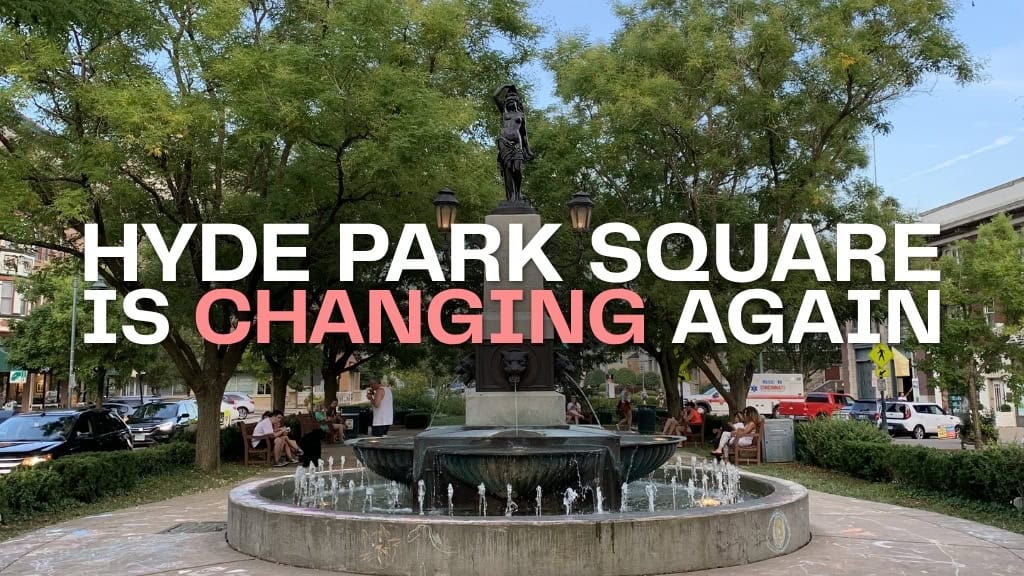
If you’ve spent much time around Hyde Park Square, you know it’s not just another shopping area in Cincinnati.
It’s where people meet for coffee, stop for dinner, walk their dogs, and run into neighbors. For many homeowners, having the Square nearby is one of the reasons they chose to live in Hyde Park in the first place.
That’s also why the proposed redevelopment at 2719 Erie Avenue has generated so much discussion.
In June 2026, developers submitted a revised proposal after residents raised concerns about an earlier version. The updated plans reportedly remove the hotel, reduce the number of residential units, lower the proposed building height, and change some of the parking and traffic arrangements.
Those are meaningful changes. But they haven’t settled the debate.
Some residents see an opportunity to bring new housing, businesses, and investment to Hyde Park Square. Others worry that the project could change the character of a neighborhood they’ve known for years.
If you own a home in Hyde Park or are considering buying here, the question is a little more personal: What could this redevelopment mean for your property, your neighborhood, and your daily life?
Let’s look at what’s being proposed and what I’d encourage you to consider.
What’s Changing With the Hyde Park Square Redevelopment?
The proposed project at 2719 Erie Avenue has gone through more than one version.
The earlier proposal involved a mixed-use development that would require zoning and design approvals from the City of Cincinnati. It also generated significant neighborhood opposition, particularly over the building’s size and its relationship to the surrounding Square.
The revised proposal submitted in June 2026 reportedly includes several changes:
- Removal of the previously proposed hotel
- A reduction in the number of residential units
- A proposed maximum building height approximately 10 feet lower than before
- Changes to parking and vehicle circulation
- Continued plans for a combination of residential and commercial uses
The developers appear to be responding to some of the concerns raised during the earlier review process.
But there’s an important distinction between submitting revised plans and receiving final approval.
The June 2026 proposal should not be treated as the final building design. Details may change through city review, public meetings, and additional planning.
If you’re researching homes near Hyde Park Square, it’s worth following the official city records rather than relying only on renderings or neighborhood conversations.
Why Are Hyde Park Residents Divided Over the Project?
When you talk about redevelopment in an established neighborhood, people naturally have different priorities.
Some homeowners want to see new investment and additional businesses. Others are concerned about losing the buildings and streetscape that make the area recognizable.
Both perspectives are worth understanding.
Why Some Residents Support Redevelopment
Supporters see the project as an opportunity to bring new life to an important commercial area.
Additional housing could mean more customers for nearby restaurants and shops. Updated commercial spaces might attract businesses, and improvements to sidewalks or pedestrian connections could make parts of the Square easier to navigate.
There’s also a practical argument for adding housing near existing amenities.
Some buyers specifically want to live somewhere they can walk to dinner, pick up coffee, or run errands without getting in the car every time.
A thoughtfully designed mixed-use development could appeal to those buyers.
Why Others Still Have Concerns
Opponents believe the revised plans may still be too large for the location.
They’ve raised questions about building height, architectural character, demolition, parking, traffic, and the effect on nearby streets.
The Peebles building has become a particular concern for preservation advocates who believe its removal would change part of Hyde Park Square’s historic character.
For homeowners who have lived in the neighborhood for decades, those concerns aren’t necessarily about opposing all development.
They’re often about how much change is appropriate and whether the new construction will fit the surrounding area.
The real question isn’t simply whether Hyde Park Square should change. It’s what kind of change makes sense for this particular location.
What Could the Redevelopment Mean for Hyde Park Home Values?
This is one of the first questions homeowners tend to ask when a major project is proposed nearby.
Will new development increase property values? Could additional traffic or larger buildings make certain homes less desirable?
The answer depends on the property and what ultimately gets built.
Hyde Park already appeals to buyers who appreciate its established residential streets, recognizable neighborhood center, and access to restaurants and shopping.
New commercial investment and housing could strengthen that appeal for some buyers.
But not every property would experience the same impact.
Consider two homes near the Square.
One might be several blocks away, with convenient access to shops and restaurants but little direct exposure to construction or increased activity.
Another might sit much closer to the proposed development, where changes to traffic, deliveries, or parking could become more noticeable.
Those homes may appeal to different buyers even though they’re in the same neighborhood.
I wouldn’t recommend pricing a Hyde Park home based on assumptions about what this redevelopment will do to property values.
If you’re considering selling, look at recent comparable sales, your home’s condition, current competition, and what buyers are actually paying for similar properties.
The proposed development is relevant, but it’s only one part of the property’s market position.
Parking and Traffic: What Buyers Should Pay Attention To
Parking around Hyde Park Square is already something people think about, especially when they’re visiting restaurants or shops during busier hours.
Adding residential units and commercial activity could change how vehicles move through the area.
The revised plans reportedly address some parking and circulation concerns, but the details will matter.
For example, where will residents enter a parking garage? How will delivery trucks access businesses? Could drivers looking for parking end up using nearby residential streets?
These questions may have different answers depending on the final design.
If you’re looking at a home near Hyde Park Square, I recommend visiting the area more than once.
Drive through on a weekday morning. Come back during dinner hours or on a weekend.
Pay attention to how easy it is to enter and leave the street, where visitors park, and how much activity you can hear from the property.
You might find that you enjoy being close to a busy neighborhood center. Or you might decide you’d prefer a quieter street a little farther away.
Neither preference is wrong. It’s about finding the right fit.
Construction Could Affect Nearby Homes and Businesses
One thing that sometimes gets overlooked in redevelopment conversations is what happens before the finished project opens.
If the development receives the necessary approvals and moves into construction, nearby residents and businesses could experience temporary disruptions.
Depending on the final plans, that might include demolition, excavation, construction vehicles, utility work, sidewalk restrictions, noise, and changes to parking or street access.
The exact impact can’t be determined without a detailed construction plan.
Still, it’s worth considering if you’re planning to buy a home very close to the proposed site.
Ask about the property’s location relative to potential construction activity. Review available city documents and pay attention to future announcements about work schedules and access.
If you’re selling a nearby home, be accurate about what you know.
You don’t need to speculate about worst-case scenarios, but you also shouldn’t promise buyers that construction won’t affect them.
What Is Plan Hyde Park 2026, and Why Does It Matter?
Another part of this conversation is Plan Hyde Park 2026, Cincinnati’s updated long-range planning guide for the neighborhood.
The plan addresses issues such as housing, transportation, land use, public spaces, and neighborhood character.
It doesn’t automatically approve or reject the proposed redevelopment at 2719 Erie Avenue.
However, it provides important context for how the city and community think about future changes.
The project also involves Cincinnati’s zoning and urban-design review processes.
For residents, this means there’s more to evaluate than the appearance of the proposed building.
City reviewers may consider how the development relates to surrounding streets, pedestrian activity, existing buildings, and broader neighborhood planning goals.
If you’re interested in the outcome, reviewing the actual plans and participating in public meetings can be more useful than relying on social media discussions alone.
What Should Hyde Park Buyers and Sellers Do Right Now?
If you’re thinking about buying a home in Hyde Park, I wouldn’t let the proposed redevelopment automatically discourage you.
But I also wouldn’t ignore it.
Start by looking at the property itself. Does it meet your needs? Is the price supported by comparable sales? Do you like the street and the surrounding area?
Then consider how close the home is to the proposed project and what changes might realistically affect your daily routine.
For sellers, the approach is similar.
Focus your marketing on the home’s existing advantages, including its condition, layout, location, and proximity to current neighborhood amenities.
Avoid making promises about future commercial spaces, property appreciation, or construction timelines.
And if you’re unsure how the redevelopment might affect a particular property, talk with a Realtor who can help you evaluate the current market rather than guessing about the future.
Common Questions About the Hyde Park Square Redevelopment
Has the revised Hyde Park Square development been approved?
The June 2026 proposal was submitted as a revised plan. Its current approval status should be confirmed through Cincinnati’s official Planning Commission, City Council, zoning, and development records.
Why are some residents opposed to the project?
Concerns include the proposed building’s size, demolition of existing structures, historic character, parking, traffic, and potential construction disruptions.
Could redevelopment make Hyde Park Square more desirable?
It could. Additional housing, updated commercial space, and pedestrian improvements may appeal to some buyers. Others may be concerned about increased activity or changes to the area’s appearance.
Will nearby Hyde Park home values increase or decrease?
There’s no reliable way to predict a uniform impact. Property values will continue to depend on factors such as location, condition, buyer demand, inventory, and the final development.
Should I wait to buy or sell until the project is decided?
Not necessarily. Your decision should be based primarily on your goals and current market conditions. The proposed redevelopment is worth considering, but it shouldn’t be the only factor guiding your timing.
Thinking About Buying or Selling in Hyde Park?
Hyde Park Square has always been an important part of what makes this Cincinnati neighborhood appealing to so many homeowners.
The proposed redevelopment could bring meaningful changes, but there are still questions about its final design, approval status, and potential effects on nearby properties.
If you’re considering buying or selling in Hyde Park, the best approach is to understand what’s happening without making assumptions about the outcome.
At The Chabris Group, we help buyers and sellers throughout Cincinnati evaluate homes, neighborhoods, and local market conditions so they can make informed decisions.
If you have questions about a particular Hyde Park property or how the proposed redevelopment could relate to your plans, we’d be happy to share our local perspective.
Contact The Chabris Group whenever you’re ready to talk through your options.
About The Chabris Group
The Chabris Group is one of the most trusted real estate teams serving Cincinnati and the surrounding region. Peter Chabris launched The Chabris Group in 2006, and the team has since helped clients with more than 5000 sales and over $1.25 billion in sales volume.
Recognized as Cincinnati’s #1 real estate sales team, The Chabris Group has earned more than 2100 five-star reviews across Google, Zillow, Facebook and Angi The team is also the #1 Keller Williams real estate team in Ohio, Kentucky, and Indiana, one of the top 25 Keller Williams real estate sales teams in the United States, and nationally recognized as the #23 RealTrends Best Real Estate Team by Transaction Sides.
Free Home Price Estimate

Schedule a Call

Have a question for Peter?

Have a question for TCG?